As part of my preparations for Ramadan this year, I decided to spend some time focusing on my dua, and defining what it is I would be asking of Allah during this special month. I realized that whilst dua is a daily practice, preceded by my every salaah, I have not given it enough meaningful attention to benefit from the value I could otherwise gain from it.
Allah says in the Quran (Chapter 40, Verse 60): “Call upon me; I will respond to you.”
I became aware that I have not been clear and specific in my appeal to Allah, often just quickly rattling off some previously thought of requests without giving it conscious thought. To expect results, I need to define exactly what I wanted from Allah, in all aspects of my life. This way I can feel sincerer and connected to Allah with my requests. So I sat down and brainstormed all the many things I wanted for myself- and my family by using an awesome tool called “Mind Maps.”
This takes me back to my school and university days where I would use this technique for studying, to categorise information when there is a lot to work with. Mind Maps are a creative way to visually represent ideas or lists that we have in our minds. It can help us to structure our thinking to give it purpose and meaning. We start with one idea and branch off to many others, thereby capturing all the things we want under each topic.
How to complete the Dua Mind Map
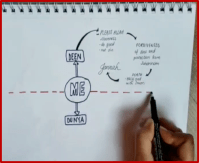 So for example, when structuring my dua request, I started with myself: “Me” in the image above, and then separated into two main areas: Deen (Hereafter) and Dunya (This World). Under “deen” I listed a few headings such as pleasing Allah, forgiveness and our ultimate goal – attaining jannah. You could list all the steps we need to take to get to jannah.
This World
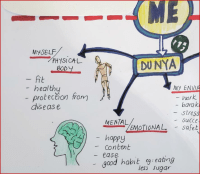
Under “dunya”, I expanded to all the aspects in my life that I could think of – such as for personal
(health, mental, emotional etc.) and then to people in my life (family, friends, ummah), my environment (work, safety, etc.). All the time, listing in each category everything I desired, for
example under health asking for a stronger body, or to meet my fitness goals. Under family I listed protection, their success and happiness. The beauty is that nothing is out of scope as I continued to list everything I wanted under each subheading, remembering that Allah is Most Powerful and Most Merciful and can grant as He wishes.
Benefits
The purpose of using this tool, over simply listing is that the subheadings or branches, just provide a logical structure to ensure everything is covered. The creative process provides a lovely flow as thoughts keep popping up, and I could easily capture it under each branch. It also brought to my consciousness some things in my life that I wanted changed, yet I was not explicitly making dua for it! So I could now add it my comprehensive dua list.
How to use it
So once complete, how do I use this dua mind map in practice? I could now either use it as a reference point to look at when making dua, or I noticed that many things I uncovered during the creative process itself, now automatically came to mind each time I make dua which is a great outcome too. This map can also be used to prompt when making shukr (thanks to Allah) as part of dua and daily practice.
Finally, for the best results, I will consider the most effective times for supplication, and structure the dua according to the way we were taught by the Messenger of Allah (May peace be upon on him) by first thanking and praising Allah, and then emptying my heart to connect to Allah more deeply, using my new and improved comprehensive dua “list”.
In this way, I feel more present when I appeal to Allah through dua. I come from a place of being heartfelt, no longer absent mindedly making dua on autopilot. Rather I am fully conscious when I am asking for what I want from Almighty Allah- detailing to my hearts desire all the requests I can think of, for myself and my family, friends and indeed the world, Insha Allah.


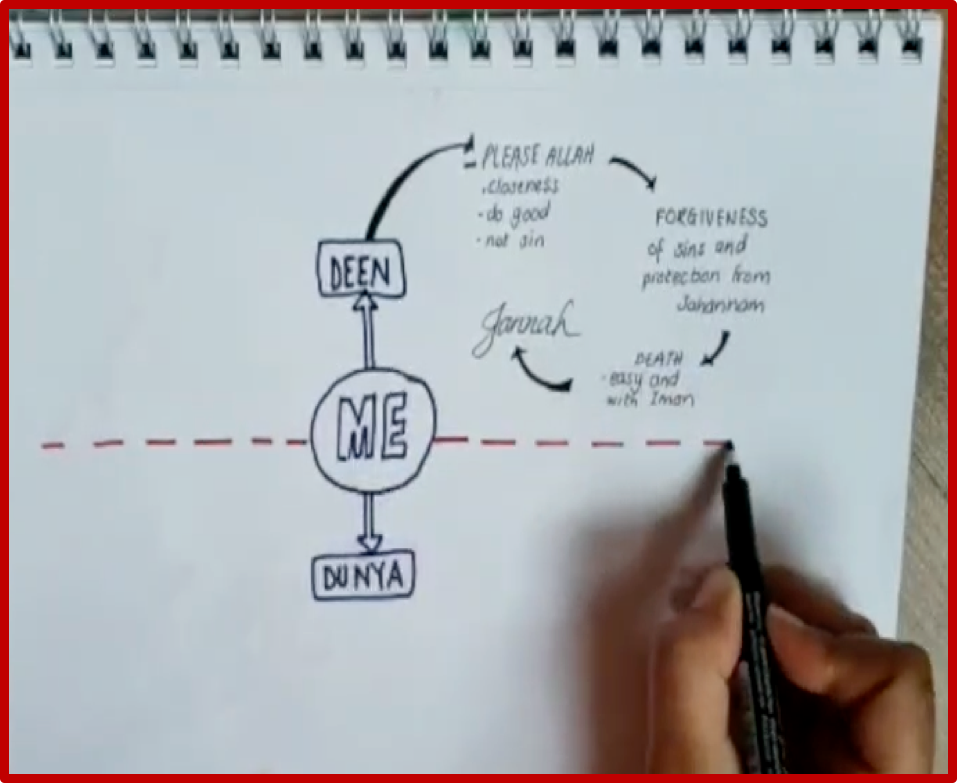 So for example, when structuring my dua request, I started with myself: “Me” in the image above, and then separated into two main areas: Deen (Hereafter) and Dunya (This World). Under “deen” I listed a few headings such as pleasing Allah, forgiveness and our ultimate goal – attaining jannah. You could list all the steps we need to take to get to jannah.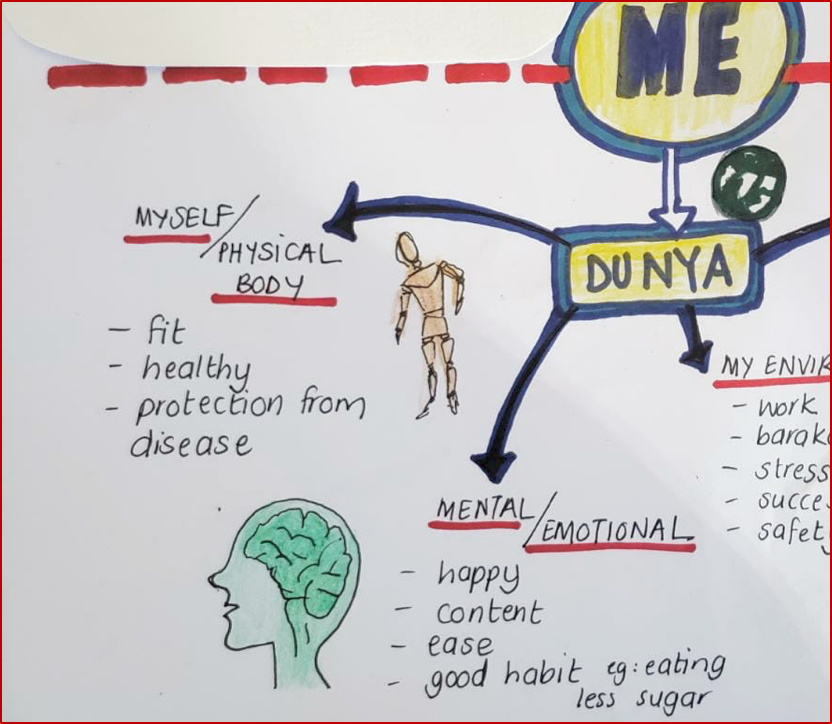

 Truly Taskeen