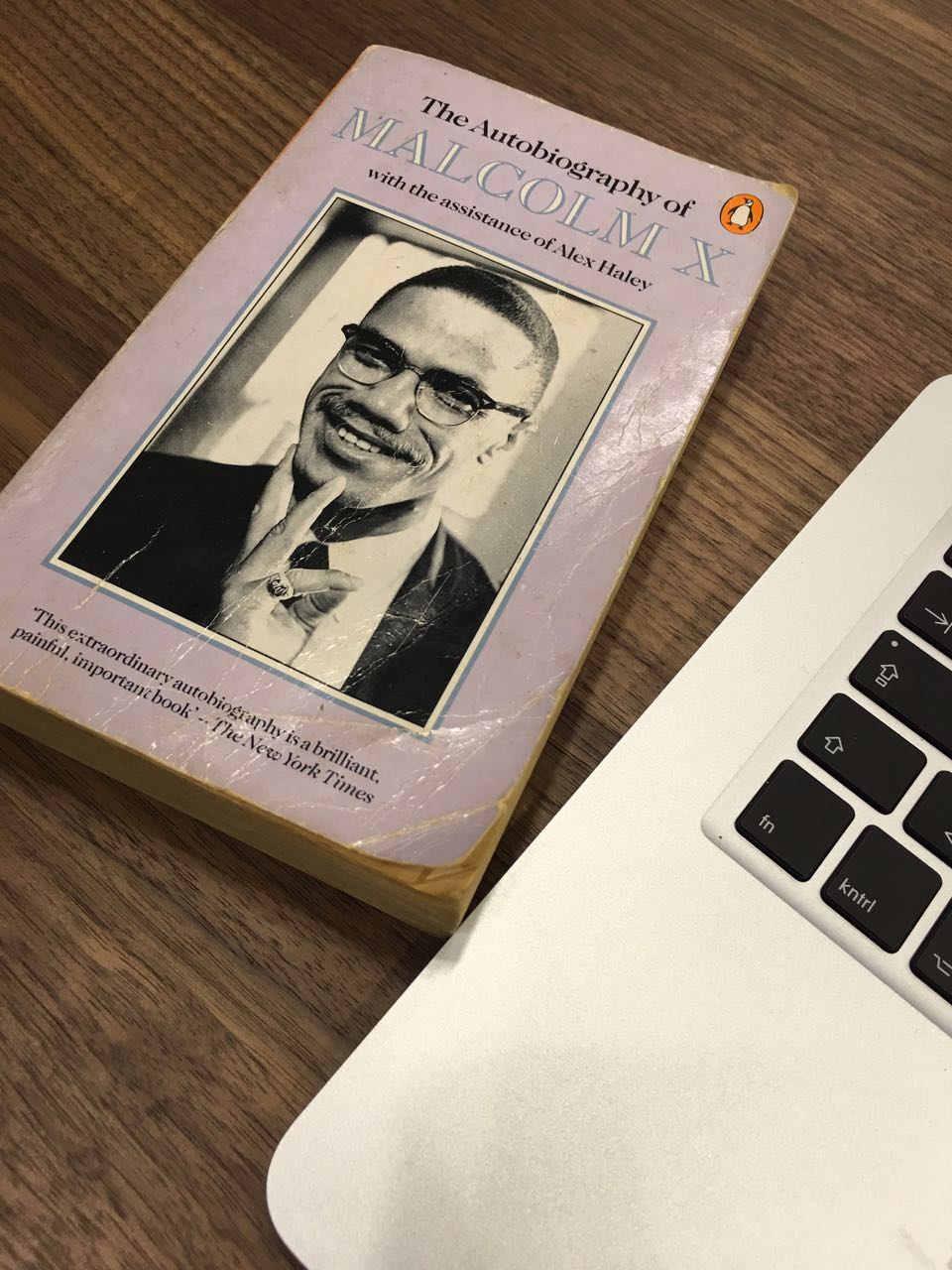
When I was 13 and in High School I had to do a speech on a well known figure. I came across a flyer at home on Malik el Shabazz (Malcolm X), and decided to do my speech on him. I was too young to fully appreciate the remarkable character and amazing story of Malcolm X. So 20 years later, (slightly!) more mature and having the opportunity to read the entire “Autobiography of Malcolm X” by Alex Healey, I’d like to share my remarkable experience in learning and understanding about this amazing individual that have had a huge impact on my worldview.
·
These are some of the lessons that I took out from his story:
How we can use the remarkable characteristics of our brotherhood and unity as Muslims to creative a positive impression of Islam to the world.
Malcolm X was completely taken aback during his journey of Hajj (Muslim pilgrimage to Makkah) when for the first time he experienced equality and unity with people where race was not a criterion. He never knew that this was a possible. He spoke about how people of all colours and backgrounds welcomed you, ate together and spoke to you with respect. He called it “colour blindness of the Muslim world.” I love that phrase. He came from a background where race was the most dominant concept in his life – He said: “It’s what all black people were focused on either defending it, or fighting against white people about it, or bringing themselves down because of it.” But when he got to Makkah, he saw how the focus of everyone was on worshipping Allah, and the question of race was insignificant and irrelevant. This was a remarkable shift for him. He said that he could see how all Muslims in that special place behaved as “one” and how this was a reflection of the “Oneness of Allah.” This unity was the reason for Malcolm’s complete shift in perspective regarding the “white man”, which he later captured in a letter he sent back home. One of his other observations was the remarkable opportunity that this brotherhood could serve for really communicating to the world what Islam was about. He said:
“I saw that Islam’s conversions around the world could double and triple if the colorfulness and the true spiritualness of the Hajj pilgrimage were properly advertised and communicated to the outside world.
This I made me realise that only a Muslim can understand the sense of brotherhood we feel during Hajj (as only Muslims are allowed to enter the boundaries of Makkah and participate in Hajj). We therefore have a responsibility to “market” this to those who have not experienced it i.e. strategically increase awareness and inspire others to also share in this wonderful gift. Perhaps we could use the hashtag #muslimunity to share examples of our unity as Muslims, from the way we interact with our neighbours in our day to day lives to the practices of Eid and other such occasions. I feel if we did this, then we could fulfil one of Malcolm X’s visionary initiatives that he didn’t get a chance to execute given his short life. We can help build this up so it becomes a beacon of representing one of the most brilliant aspects of being a Muslim- our unity and sense of brotherhood.
· Everything happens for a reason, through Allah’s Wisdom
Malcolm X’s life was completely transformed when he was off the streets and in a complete change of environment. He discovered Allah, Islam and new way of life from within a prison cell. But for this to happen, he had to drop to his lowest point, after much grief and corruption, to finally being locked up in jail. One could view this as a terrible situation to be in – however it represented a complete turnaround for him, and reflects the Power of Allah to guide whomsoever He desires.
· The racism that was prevalent in America, in such recent times as recent as the 1950’s was a total eye opener for me. I always knew it was there, but then something struck me about one particular incident – where Malcolm X describes how black people had to sit in the back of a bus and the white people in the front. That really stood out for me – how absolutely insanely ridiculous it is for one man to determine that another human being is not worthy of sitting somewhere because the colour of his skin? I find these questions roaring in my head: What kind of people do you have to be to allow this to occur? It’s the same as in South Africa during the days of apartheid, where there were specific benches for black people to sit on and different for white people. Where do you get off deciding one kind of people are superior to another? I find it totally appalling. And the plight of the people facing this oppression really touched on something in my heart.
· He was incredibly insightful in how he approached people to spread the word.
He knew that to connect with people, he had to meet them where they were – on their level, and in their way. So when he started to spread the word of Islam, he first understood where his audience were and used angles appropriate to them to ensure his message landed optimally. Similarly, one of the remarkable programmes of the Nation of Islam (the religious movement that brought Malcolm X into Islam led by Elijah Muhammad at the time) for treating dope-addiction had six steps for addicts to follow, the last one being once you were over your addiction, you would then have to go out and ‘fish in’ others as you know what it was like and can approach others with knowledge and technique that they would better respond to. Because of its tremendous success and effectiveness, this programme was covered in the New York times, and other groups were interested in using this unique approach.
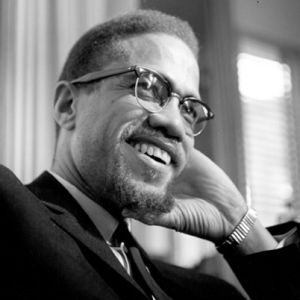 · How to connect and positively influence a crowd
One of Malcolm X’s strength’s was that he was incredibly eloquent and had a commanding way of engaging a crowd as well as the ability to debate with power. In the book, he spoke about his ability to “feel the audience reaction” and this being his unique trump card. His approach resonates with me as I am reminded about one of the concepts of BodyTalk (a whole-healthcare system I practice) around synergistically using both aspects of your brain to function optimally– Malcolm X used his left brain for the logic, structure of his argument and learned facts and the right brain to intuitively feel his audience and then appropriately act, displaying an amazing ability to fully engage with people to bring out the best results – something we can learn from and practice too.· He makes an interesting point about how society can be lifted if we strike a balance between “material progression and spiritual values”. I love that. It’s not saying that we shouldn’t increase our wealth and the things we own necessarily – but he suggests that if we do, we do not loose the spiritual side – meaning not attaching yourself to the wealth. Rather, use it as a means to benefit society as well, not just for selfish gain. These are the principles taught in Islam.
· He was not afraid to change his point of view and openly share this. That in and of itself takes immense courage. Most of us think it’s a sign of weakness if we change our viewpoint on something we perhaps held very strongly before. But life is dynamic, things can evolve and to having the strength of character to openly admit to having a new perspective is refreshing and really admirable. Malcolm does this when his perspective of white people changes after Hajj. He also has a huge realisation of how he had held Elijah Muhammad in such a high rank, such that he felt he was even divinely – and so when Elijah’s human weakness was revealed (he was involved in adultery, and Malcolm X suspected he played a role in encouraging the death sentence for himself), it was crushing for the former, but also hugely insightful. It made Malcolm X realise how it is dangerous to put your faith in a human, for only Allah can be solely relied on and only Allah is Most Powerful.
· The influence of media. I think it was really horrible how Malcom X’s actions were negatively portrayed in the media. Of course he must have been seen as a threat – inciting so much change and getting his people to challenge their situation and giving them the courage to stand up for their rights. He was portrayed as a “hater” and “igniter of violence” and this tarnished his reputation and hindered his cause. There was also the jealousy amongst his own people that led to them to trying to destroy him, ultimately leading to his assassination
Allah truly guided him, as he was a man that came from the extremes of on one hand having a background as a drug addict and street hustler and then found Islam -at least a version of it until his mind was completely open to the true Islam and worshipping Allah as He should be worshipped.
Because he kept seeking the truth as his main drive in life, this enabled him to keep an open mind despite his immensely strong convictions to the Nation of Islam and Elijah Muhammad. And that’s why during Hajj he was able to finally completely transform and see what Islam was really about. He was guided to see that what he was taught by Elijah Muhammad about the “white man being the devil” was not true, that Islam taught equality and unity and that through having a higher purpose of serving Allah, racism was erased.
In his famous “Letter from Mecca” he said:
“America needs to understand Islam, because this is the one religion that erases from its society the race problem. Throughout my travels in the Muslim world, I have met, talked to, and even eaten with people who in America would have been considered ‘white’–but the ‘white’ attitude was removed from their minds by the religion of Islam. I have never before seen sincere and true brotherhood practiced by all colors together, irrespective of their color.”
He was a remarkable man, a visionary and a leader. He was impatient, an activist and he wanted to see change. He was dedicated and passionate, he wanted to grow the number of Muslims in the world and he was prepared to go out and do what it takes himself to achieve this.
The world could do with people like him today.







 Truly Taskeen