What helps me making sense of tragedy – developing through difficulty

I’ve been grappling with trying to process the effects of the recent earthquakes in Turkey and Syria.

Such a huge tragedy that has affected millions of lives – it’s alot to get your head around. Some of us are not directly impacted, but living in this country, we are impacted none the less.

My starting point in processing, is to understand it in my own mind. To do that, I consider the context, impact, and whats incredibly insightful has been shining an islamic lens on it to see it from that angle.

I don’t have a clear picture to share as yet – but these resources have been very beneficial to me in providing me some perspective and to organise my thoughts. I would like to share in the hopes that I also inspires you and gives you deeper understanding too.

1. Pop-Up Healing Circle for the Earthquake in Turkey, Syria, and the surrounding regions from Maristan

This presentation had mental health professionals, Drs and community leaders with humanitarian work experience unpack what trauma is faced after crisis, for both those affected directly or facing secondary effects. It helped me give a name to the feelings I was having.

2. Understanding decree and command of Allah by Imam Shuaib Webb
This was a live zoom meeting – but he summarises a key point in this clip on his Instagram page. I felt validated, comforted by his words and he gave alot to think about. Favourite quote:

“Your stability for your kids will calm their instability in face of the earthquake situation”

3. Why does Allah allows earthquakes and suffering by Imam Omar Suleiman

This short talk gave me so much hope and acceptance. I was reminded how as Muslims we know that our pain has a purpose. Everything we go through is to teach us something and is part of something bigger we are working for. My favourite point was about how as people of faith, we have the golden gift of “perspective”. So lets use it to work through this tragedy.

Do you have any great links that have inspired you through adversity? How have you been processing the recent events, what helps you to get through difficult times?

Overlook and Move on

Every relationship – family, friends, even the relationship you have with yourself have understandable challenges from time to time to overcome. Recently I have been observing myself and my family to understand where exactly conflict is coming from in order that it can be dealt with more effectively – and avoided where possible.

My conclusion is that life will be so much better if we all just learnt how to overlook.
Overlook when people don’t live up to our expectations (well not having expectations of anyone in the first place is better anyway!).
Overlook when people say or do things that hurt us. Learn to ignore, make excuses. Just leave people to answer for their own deeds. Why do we feel the need to restore justice in the world? Its not our place. Overlook and move on.
Why do we take everything so seriously? Why do we feel it is our “right” for someone to do x and y for us? “Why didn’t they thank me for the nice gift/gesture I did for them?” Well if I expect this and then get disappointed maybe I should recheck my intention. What am I doing it for really? Shouldn’t it all just be for the pleasure of Allah, and not anything else in return.
It is hard, we are human after all. We enjoy feeling appreciated. But really if we put all our trust in Allah, and remember that all we do is to please Him, alone then wait for our reward from Him and not anyone else.
 If its one thing I learnt from my dad, it is to just not take things so seriously and build up this mountain of hurt against people – just let it go. Overlook and move on.
#ramadanrealisations
Trying to overlook and move on, one instant at a time, Insha Allah
MbyD

Sit back and enjoy a response from ALLAH. ALLAH promises!

Greetings on this lovely day of Jumuah (Friday)


I have this thing with effort and reward. I practice it alot. Must be something I picked up growing up. Anyway, it serves me well as it works as motivation to keep me getting things done and working hard.


So it’s no wonder that this image shared on a family Whatsapp group hit home for me. It acted as a reminder for me to do my bit : all I need to do is these four things :
1. show gratitude
2. ask of Allah 
3. ask for forgiveness and 
4. constantly praise Allah
 
-and then sit back and enjoy a response from ALLAH Alone! 


There are some simple tasbeehs to read for each of these, so this is how I plan to implement.
 
Gratitude سبحان الله  (Subhanallah) Glory be to God
Ask of Allah:   لاَّ إِلَـهَ إِلاَّ أَنتَ سُبْحَـنَكَ إِنِّى كُنتُ مِنَ الظَّـلِمِينَ La Ilaha Illa Anta Subhanaka Inni Kuntu Minaz Zalimeen)  “…There are none worthy of worship besides You. Glorified are You. Surely I am from the wrongdoers.” (21:87)*
Forgiveness :  أستغفر الله‎ (Astaghfirullah)  I ask Allah forgiveness
Praise:  الحمد لله (Alhamdulillah) Praise be to Allah 
 
Maybe I can read them all every day, so maybe depending on the situation and my need I will increase recitation of a particular need. Either way, I am promised by my Lord a certain response from HIM if I do one of the following. WOW, that’s not just something, that’s everything!
 
Prayers and reminders I hope to heed, 
M4Life
 
*Dua of Prophet Yunus (May Peace be upon him), when he was swallowed by the whale and read this very powerful dua which I just love. Feel like it gets me out of any sticky situation, Alhamdulillah!

My reflections from the book: "When you hear hoof beats, think of zebras"

Book Review: When you hear hoof beats, think of zebras

This book has been on our bookshelf for ages, so it was wonderful to finally read it. These are some  of the very powerful lessons I took out of this book based on interesting Sufi tales:

  • Seeing Allah in everything and everyone around us – to me this means being in the company of those that remind you of Allah. Everything is a trace of Allah because everything is predestined and from Him. When looking at the creation,even inanimate objects, trace it back to Allah remember to admire the Creator.
  • If you spend your time going after gold in this world, you will have neither the gold nor yourself!
  • Think about what you spend your time, energy and thoughts on between prayers – We think about our life first, and weave our prayers around that. How nice to switch it around to focus on prayers first!
  • Every morning when we get up, we must remember two things- Allah and death – see how different our life will be as a result! We will realise that nothing lasts forever. And this can also be a source of comfort to help us let go and focus on what does matter.
  • A great way to view any situation: say : Maybe it’s a blessing, maybe it’s a curse, only Allah knows.
  • We don’t have to give ourselves totally to everything we do in the worldly sense – like when watching TV, or having a meaningless chat with a colleague at work – retain something of yourself, and with that remember Allah. Don’t get totally lost and immersed in everything ( except  the remembrance of Allah)Hope this was as an inspiring for you as it was to me Insha Allah!

Implementing the Inspiration,
M4Life


How has Surah Maryam made me a better person?

Salaams

 I just completed the tafseer of Surah Maryam, following the intensive series by Shaykh Abdul Nasir Jangda. I was motivated to start this when during my early weeks of pregnancy I kept hearing from people around me that Surah Maryam is a very good surah to recite during pregnancy. I researched a bit about the wisdom behind this, but could not find any concrete Hadith to support this notion, and whilst we know all of the Quraan is beneficial to us at any time, I wanted to know why this particular Surah was called out to be one to recite specifically during pregnancy. Well I was not satisfied with a seemingly unsupported claim, and so I decided that instead of only just reciting this surah, I wanted to delve a little deeper and understand the meaning of this surah, and what made it so remarkable and beneficial during pregnancy.

I came across this incredible tafseer series on the surah, and decided to dedicate the months of my pregnancy to completing the whole tafseer by Shaykh. I found it to be immensely captivating, blowing my mind at times when learning about the powerful message revealed to us by Allah, and marvelling at the absolute genius in the way the surah moves from one story to the next, lesson after lesson, covering many of the prominent prophets in Islam.

I have shared my many aha moments in blog posts over the past few months (as they were inspired to me, and now at the end of this amazing journey, I feel a little sad – this series made up a large part of my pregnant life – from the early weeks in London when I was challenged with food aversion and spent most time relaxing at home to keep up my energy, to later times when the tafseer kept me company as I prepared dinner in my new kitchen in Istanbul. No doubt my little one once born Insha Allah will recognise Shayk’s voice for many years to come! May Allah bless Shaykh and accept all the efforts of himself and his team (Salaam Studios).

I really love the last point that Shaykh made when he concluded the tafseer – he reminds us that nothing we do in relation to the Quraan – be it reciting, memorising, studying it is the end game. It is all not of value unless it  enters our hearts, manifests in a practical way in our life and changes us. Whenever we listen to such talks, the question we should ask ourselves is not “How much do I now know?” but rather “How has this made me a better person?” Powerful.  We are accountable to practice upon all that we learn – a huge responsibility. It’s also profound to realise that the way the surah ends is Allah talks about who are the people that can earn His Mercy – it’s the ones that “believe and do good deeds” – so a very apt message to end on.

Praying I can implement all that I have learnt, and use this to inspire others,
Insha Allah
M4Life

Riding the Guidance Train

Listening to the tafseer of Surah Maryam by Shaykh Jangda on YouTube and I’m absolutely inspired by this ayah he spoke about from the Holy Quran:

“And those who are guided – He increases them in guidance and gives them their righteousness.”

[Muhammad 47:17] 

The Shaykh explains that the more we follow the guidance that Allah sends us to us – the more guidance Allah will send to us! Such a simple formula, such powerful effects. This is the “guidance train” as Shaykh amusingly terms it.
So when we ask Allah for help and guidance, we shouldn’t just stop there – the journey of seeking guidance isn’t the end game – clearly what’s important is taking on the guidance we are given. Sometimes it comes to us in ways we don’t expect – like a maybe a turn of events forcing us to act in a certain way. Other times it can be some sort of inspiration we are given to take a course of action. Either way it speaks to us being conscious and aware so we can perceive this guidance- then act on it- and thereby receive even more guidance.
Hoping to ride the guidance train too Insha Allah,
M4Life

Keeping teaching prayer and charity to my children IN HOUSE!

Salaams
 
Came across this whilst listening to the tafseer of Surah Maryam by Shaykh Jangda. Really interesting advice about this verse from the Quraan (19:55).
 
“He used to enjoin on his people Prayer and Charity, and he was most acceptable in the sight of his Lord”
 
This is referring to Ismaeel (son of Abraham May peace be upon them both) and we can learn from it the importance of us being the teachers to our own children and family about these two important pillars in Islam. It is not good enough to outsource this to someone outside- no matter how learned. These are fundamental practices in Islam that have so many benefits- such as learning discipline, time management, social awareness etc. If a child learns about prayer from outside, then he associates this very significant aspect of his life with that other than his own parents – and in many ways this is a loss to the parent-child connection. Therefore we should be the ones to teach our children basics like making wudu (ablution before prayer), praying and giving charity. For more specialised areas like hifdh (memorisation of the Quraan) for instance, that would make sense to have an expert to instruct the kids as they have more in depth knowledge and skill. However the basics, we gotta keep that in house 🙂
 
I even have an idea to involve my future children Insha Allah in my annual Zakaah (compulsory charity) calculation – let them go around counting their teddy bears and dolls and give out 2.5% of their toys to charity (or better still a poor family we know)- how fun and relevant this can be for them to learn first hand what it means- not just the theory when they hit school.
 

God-Given Super Powering with Purpose

Just to share what I learnt in my family halaqa last week.
We focused on the following Quranic Ayah (3:49):
وَرَسُولًا إِلَىٰ بَنِي إِسْرَائِيلَ أَنِّي قَدْ جِئْتُكُم بِآيَةٍ مِّن رَّبِّكُمْ ۖ أَنِّي أَخْلُقُ لَكُم مِّنَ الطِّينِ كَهَيْئَةِ الطَّيْرِ فَأَنفُخُ فِيهِ فَيَكُونُ طَيْرًا بِإِذْنِ اللَّهِ ۖ وَأُبْرِئُ الْأَكْمَهَ وَالْأَبْرَصَ وَأُحْيِي الْمَوْتَىٰ بِإِذْنِ اللَّهِ ۖ وَأُنَبِّئُكُم بِمَا تَأْكُلُونَ وَمَا تَدَّخِرُونَ فِي بُيُوتِكُمْ ۚ إِنَّ فِي ذَٰلِكَ لَآيَةً لَّكُمْ إِن كُنتُم مُّؤْمِنِينَ

And [make him] a messenger to the Children of Israel, [who will say], ‘Indeed I have come to you with a sign from your Lord in that I design for you from clay [that which is] like the form of a bird, then I breathe into it and it becomes a bird by permission of Allah . And I cure the blind and the leper, and I give life to the dead – by permission of Allah . And I inform you of what you eat and what you store in your houses. Indeed in that is a sign for you, if you are believers.

When Isa (AS) is talking to his people about the skill and power he was given, he keeps attributing it back to Allah (SWT) – “… by the permission of Allah.”  This is a reminder for us, when we get any recognition for the good or great things we do, that we need to first attribute it to Allah (SWT) who had given us the skills and ability to accomplish those things.
Secondly, regarding the power which Isa (AS) to return health to his followers, Moosa (AS) was also given powers around magic to show Pharaoh the evil of his ways.  What we can learn from the reasons they were given their respective gifts is that health and medicine was the topic of the day for Isa (AS) and magic was the major discussion topic in Musa’s (AS) time.  The powers they were given were relevant to their time and place and helped in fulfilling their respective missions.  So what we can learn from here is that we too, should utilise our skills in a relevant way to help others around us and spread the message of Islam.
Obviously one of the biggest things is to simply be better Muslims ourselves, but other than that… what is the most relevant topic today which people are interested in?  Technology, Media, Social Media, etc.   We have developed skills in these areas, including marketing and sharing info – this ayah serves as a reminder that I should use these tools / skills to spread the message. And it’s a reminder that any of these “super powers” I have been given, is from Allah – not my own great doing! This is humbling and grounding.
Super-powering with Purpose Insha Allah,
M4Life

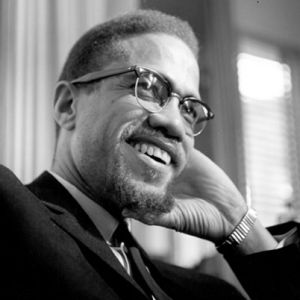
8 lessons from life of Malcolm X that could change your world

When I was 13 and in High School I had to do a speech on a well known figure. I came across a flyer at home on Malik el Shabazz (Malcolm X), and decided to do my speech on him. I was too young to fully appreciate the remarkable character and amazing story of Malcolm X. So 20 years later, (slightly!) more mature and having the opportunity to read the entire “Autobiography of Malcolm X” by Alex Healey, I’d like to share my remarkable experience in learning and understanding about this amazing individual that have had a huge impact on my worldview.
· 


    These are some of the lessons that I took out from his story:

How we can use the remarkable characteristics of our brotherhood and unity as Muslims to creative a positive impression of Islam to the world.

Malcolm X was completely taken aback during his journey of Hajj (Muslim pilgrimage to Makkah) when for the first time he experienced equality and unity with people where race was not a criterion. He never knew that this was a possible. He spoke about how people of all colours and backgrounds welcomed you, ate together and spoke to you with respect. He called it “colour blindness of the Muslim world.” I love that phrase. He came from a background where race was the most dominant concept in his life – He said: “It’s what all black people were focused on either defending it, or fighting against white people about it, or bringing themselves down because of it.” But when he got to Makkah, he saw how the focus of everyone was on worshipping Allah, and the question of race was insignificant and irrelevant. This was a remarkable shift for him. He said that he could see how all Muslims in that special place behaved as “one” and how this was a reflection of the “Oneness of Allah.” This unity was the reason for Malcolm’s complete shift in perspective regarding the “white man”, which he later captured in a letter he sent back home. One of his other observations was the remarkable opportunity that this brotherhood could serve for really communicating to the world what Islam was about. He said:
I saw that Islam’s conversions around the world could double and triple if the colorfulness and the true spiritualness of the Hajj pilgrimage were properly advertised and communicated to the outside world.
This I made me realise that only a Muslim can understand the sense of brotherhood we feel during Hajj (as only Muslims are allowed to enter the boundaries of Makkah and participate in Hajj). We therefore have a responsibility to “market” this to those who have not experienced it i.e. strategically increase awareness and inspire others to also share in this wonderful gift. Perhaps we could use the hashtag #muslimunity to share examples of our unity as Muslims, from the way we interact with our neighbours in our day to day lives to the practices of Eid and other such occasions. I feel if we did this, then we could fulfil one of Malcolm X’s visionary initiatives that he didn’t get a chance to execute given his short life. We can help build this up so it becomes a beacon of representing one of the most brilliant aspects of being a Muslim- our unity and sense of brotherhood.
·  Everything happens for a reason, through Allah’s Wisdom
Malcolm X’s life was completely transformed when he was off the streets and in a complete change of environment. He discovered Allah, Islam and new way of life from within a prison cell. But for this to happen, he had to drop to his lowest point, after much grief and corruption, to finally being locked up in jail. One could view this as a terrible situation to be in – however it represented a complete turnaround for him, and reflects the Power of Allah to guide whomsoever He desires.
·  The racism that was prevalent in America, in such recent times as recent as the 1950’s was a total eye opener for me. I always knew it was there, but then something struck me about one particular incident – where Malcolm X describes how black people had to sit in the back of a bus and the white people in the front. That really stood out for me – how absolutely insanely ridiculous it is for one man to determine that another human being is not worthy of sitting somewhere because the colour of his skin? I find these questions roaring in my head: What kind of people do you have to be to allow this to occur? It’s the same as in South Africa during the days of apartheid, where there were specific benches for black people to sit on and different for white people. Where do you get off deciding one kind of people are superior to another? I find it totally appalling. And the plight of the people facing this oppression really touched on something in my heart.
·      He was incredibly insightful in how he approached people to spread the word.
    He knew that to connect with people, he had to meet them where they were – on their level, and in their way. So when he started to spread the word of Islam, he first understood where his audience were and used angles appropriate to them to ensure his message landed optimally. Similarly, one of the remarkable programmes of the Nation of Islam (the religious movement that brought Malcolm X into Islam led by Elijah Muhammad at the time) for treating dope-addiction had six steps for addicts to follow, the last one being once you were over your addiction, you would then have to go out and ‘fish in’ others as you know what it was like and can approach others with knowledge and technique that they would better respond to. Because of its tremendous success and effectiveness, this programme was covered in the New York times, and other groups were interested in using this unique approach.
·  How to connect and positively influence a crowd
One of Malcolm X’s  strength’s was that he was incredibly eloquent and had a commanding way of engaging a crowd as well as the ability to debate with power. In the book, he spoke about his ability to “feel the audience reaction” and this being his unique trump card. His approach resonates with me as I am reminded about one of the concepts of BodyTalk (a whole-healthcare system I practice) around synergistically using both aspects of your brain to function optimally– Malcolm X used his left brain for the logic, structure of his argument and learned facts and the right brain to intuitively feel his audience and then appropriately act, displaying an amazing ability to fully engage with people to bring out the best results – something we can learn from and practice too.
·  He makes an interesting point about how society can be lifted if we strike a balance between “material progression and spiritual values”. I love that. It’s not saying that we shouldn’t increase our wealth and the things we own necessarily – but he suggests that if we do, we do not loose the spiritual side – meaning not attaching yourself to the wealth. Rather, use it as a means to benefit society as well, not just for selfish gain. These are the principles taught in Islam.
·  He was not afraid to change his point of view and openly share this. That in and of itself takes immense courage. Most of us think it’s a sign of weakness if we change our viewpoint on something we perhaps held very strongly before. But life is dynamic, things can evolve and to having the strength of character to openly admit to having a new perspective is refreshing and really admirable. Malcolm does this when his perspective of white people changes after Hajj. He also has a huge realisation of how he had held Elijah Muhammad in such a high rank, such that he felt he was even divinely – and so when Elijah’s human weakness was revealed (he was involved in adultery, and Malcolm X suspected he played a role in encouraging the death sentence for himself), it was crushing for the former, but also hugely insightful. It made Malcolm X realise how it is dangerous to put your faith in a human, for only Allah can be solely relied on and only Allah is Most Powerful.
·  The influence of media. I think it was really horrible how Malcom X’s actions were negatively portrayed in the media. Of course he must have been seen as a threat – inciting so much change and getting his people to challenge their situation and giving them the courage to stand up for their rights. He was portrayed as a “hater” and “igniter of violence” and this tarnished his reputation and hindered his cause. There was also the jealousy amongst his own people that led to them to trying to destroy him, ultimately leading to his assassination
Allah truly guided him, as he was a man that came from the extremes of on one hand having a background as a drug addict and street hustler and then found Islam -at least a version of it until his mind was completely open to the true Islam and worshipping Allah as He should be worshipped.
Because he kept seeking the truth as his main drive in life, this enabled him to keep an open mind despite his immensely strong convictions to the Nation of Islam and Elijah Muhammad. And that’s why during Hajj he was able to finally completely transform and see what Islam was really about. He was guided to see that what he was taught by Elijah Muhammad about the “white man being the devil” was not true, that Islam taught equality and unity and that through having a higher purpose of serving Allah, racism was erased.
In his famous “Letter from Mecca” he said:
“America needs to understand Islam, because this is the one religion that erases from its society the race problem. Throughout my travels in the Muslim world, I have met, talked to, and even eaten with people who in America would have been considered ‘white’–but the ‘white’ attitude was removed from their minds by the religion of Islam. I have never before seen sincere and true brotherhood practiced by all colors together, irrespective of their color.”
The full letter can be read here it makes for a fascinating read: http://www.malcolm-x.org/docs/let_mecca.htm
He was a remarkable man, a visionary and a leader. He was impatient, an activist and he wanted to see change. He was dedicated and passionate, he wanted to grow the number of Muslims in the world and he was prepared to go out and do what it takes himself to achieve this.

The world could do with people like him today.

Two Forms of Mercy…Two states in One

Salaams

So I listened to a talk recently by Ustaadh NAK (you know who I mean!) explaining the two Names of Allah Ar Rahman and Ar Rahim : two forms of mercy and I was so inspired. 

I also learnt that by listening to something more than once it really solidifies your understanding. Anyway here is my take on it based on what I heard:

Ar Rahman – ارحمان : Allah’s mercy and love is extreme, not permanent( this life),  happening right now ( eg hunger similar word pattern جوعان)  mercy that’s more immediate.

Ar Rahim – ارحيم – Allah’s mercy  that’s always there and you can count on it. Quality that doesn’t change. Not necessarily taking place right now- potential.

So what does it mean?

When you want Allah’s mercy in a time of need, you need it immediately – and intensely! Then you appeal to His quality of Ar Rahman. Not thinking of the future or the potential of mercy right now. But as a human we need instant meeting of needs.

Once it’s met, you now can turn to his quality of Ar Raheem knowing he will always have Mercy should you need to call upon it in the future.
Subhanallah!

Only in Allah the Most Powerful can two forms exist in one – amazing.

May Allah grant us understanding and MERCY

Aameen

🙂
Praying for His Mercy,
M4Life